The Reichstag Fire and the repression that followed
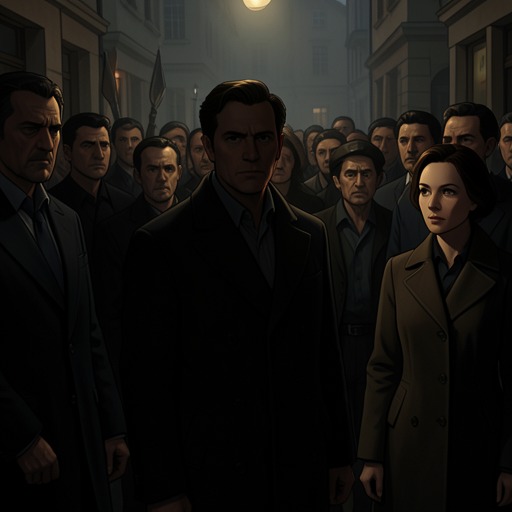
The Zone of InterestThe Reichstag Fire and the repression that followed are presented as the hinge between Nazi political ascendancy and open dictatorship. The fire, on February 27, 1933, supplies the pretext Paul Doll says the regime used to outlaw all opposition; by March, thousands of leftist notables have been arrested, tortured, and imprisoned. Its consequences reach into private life as well as public politics: Dieter Kruger is among the prisoners sent to Dachau, where Doll is one of his jailers. In Doll’s retrospective telling, political emergency becomes both a historical explanation and an alibi, making the fire’s cause and the repression it enables inseparable from the stories perpetrators tell about themselves.
The Fire as a Political Turning Point
Doll looks back on the fire as the moment when the path to autocracy became clear. He rejects both the familiar account of a confused lone Dutch Communist setting the blaze and the possibility that the Nazis started it themselves. Instead, he attributes it to destiny and providence, even describing the Reichstag as having been torched by God. The explanation does not establish what caused the fire; it reveals Doll’s way of turning a political catastrophe into a sacred inevitability. His account erases human agency precisely where agency matters most, even as he openly describes what the authorities did next.
That next step, in Doll’s formulation, was simple and decisive: after the fire, the regime made all opposition illegal. By March 1933, four thousand leftist notables had been arrested, tortured, and imprisoned. The progression from a blaze in the parliament building to mass repression is narrated not as a temporary response but as the opening of an unobstructed road to autocracy. The political significance lies in that conversion of emergency into durable rule: the fire supplies the occasion, while the destruction of opposition supplies the lasting consequence.
Arrests and the Personal Reach of Repression
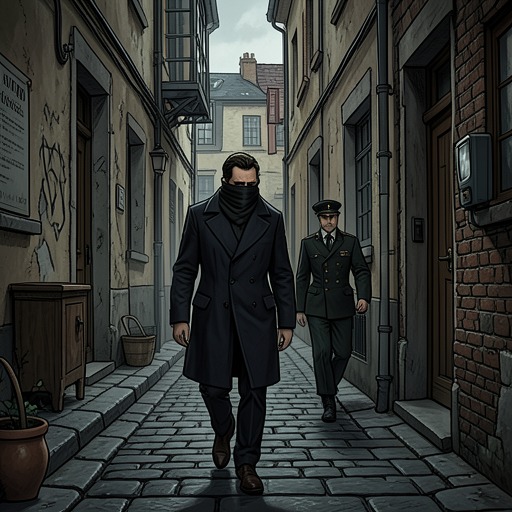
The campaign reaches Dieter Kruger among the thousands caught in the arrests. Hannah Doll recalls that, in March 1933, he was arrested, tortured, and imprisoned; he was then sent to Dachau. There, Corporal Doll was among his early jailers. The political consequences thus enter the novel through an intimate triangle of people whose lives are altered by the new power: Hannah remembers Dieter’s imprisonment, while Doll’s own retrospective account places him inside the apparatus that confined him.
The connection is not merely a matter of a future commandant passing through a historical scene. In a later recollection, Doll describes the arrest of opposition as the moment when the regime’s political opportunity opened, and his account of Dachau places him on the side of those who enforced it. The fire’s aftermath therefore has a personal duration: it does not end with the arrests of March 1933. It places political prisoners under the control of men such as Doll and establishes a setting in which detention and violence become instruments of rule.
From Emergency Rule to Expanding Bureaucracy
The novel’s later accounts do not claim that the Reichstag Fire directly dictated every subsequent Nazi policy. Instead, they show how the repression that followed belongs to a regime whose institutions and officials repeatedly turn political objectives into administrative decisions. In a later reflection on the mass murder of Europe’s Jews, Doll recounts a July 1941 authorization drafted by Adolf Eichmann and Reinhard Heydrich, sent to Hermann Goring, and returned with his signature. He describes a change from proposals to remove Jews to the decision to kill women and children as well as men. This later episode is distinct from the 1933 arrests, but it places the earlier destruction of political opposition within a longer history of state power expanding its reach.
A conversation with Konrad Peters further resists the idea that later killing depended on one particular technology. Peters calls gas chambers and crematoria means of accelerating the process, saving resources, and sparing the killers’ nerves; he insists that bullets and pyres could have produced the same outcome because the perpetrators had the will. The reflection shifts attention from machinery to intention. Read alongside Doll’s account of the fire, it marks a grim continuity: institutions may change their procedures and scale, but explanations that make violence seem necessary or inevitable obscure the choices made by those carrying it out.
Retrospective Narration and Historical Irony
The account is shaped by retrospective narration, especially Doll’s effort to claim authority over what the fire meant. His providential explanation conflicts with the concrete political result he describes: the regime outlawed its opponents and arrested thousands. The mismatch makes his version unreliable as an account of cause, while making it revealing as an account of perpetrator self-justification. Destiny takes the place of responsibility in his explanation; the steps taken by the authorities immediately afterward remain visible.
The book also returns to political memory through ritual. At a later November 9 commemoration, Doll delivers a speech that links different dates to the movement’s self-image and presents its history through grievance, sacrifice, and sacred symbols. That ceremony is not part of the fire’s immediate aftermath, but it echoes Doll’s earlier habit of recasting political events as providential history. Against these performances, the account of arrests, torture, imprisonment, and Dachau supplies a less flattering measure of what the regime’s claims of destiny accomplished. The fire matters not only as a turning point in the consolidation of power, but as a test of the stories by which that power is made to appear ordained.